Friday, October 12, 2012


The Nitrogen Cycle.


  • There are two different bacteria that break down wastes from the fish, the first is Nitrosomonas, which converts Ammonia into Nitrites. These Nitrites are then converted into Nitrates by Nitrobacter bacteria, the plants can then consume the nitrates to grow
  • One essential unseen element to an aquaponic system is the benefitial bacteria. The bacteria flourish in the dark moist gravel filled grow beds, and break down elements in the water into a form which the plants can absorb and use. An aquaponic system is organic due to it's very own nature. Synthetic fertilisers can't be fed to the plants or it will adversely affect the fish and the beneficial bacteria, the system has to be kept natural.


KELULUT BEE

Unlike most bees, kelulut harmless to humans and the honey produced is very useful in the field of medicine and health. Kelulut bee is similar only much smaller.This insects have three pairs of legs are all segmented. A pair of rear legs have spines that are very much able to hold tightly to the pollen collected from plants. The head has a pair of eye which is wide, similar to locust eye, has a pair of antennae, with long spout for kelulut bee to suck nectar easily. It also has a pair of wings on his back which makes measuring longer and able to move nippy  freely in the air.


From studies conducted around the world, has found 150 species of bee Trigona kelulut among scaptotrigona, Trigona laeviceps, Trigona apicalis, Trigona thorasica, Trigona itama and others.
Countries that have been identified between Trigona bees are Indonesia (37 species), Thailand (20 species), Myanmar (9 species), Vietnam (8 species), India (3 species), Taiwan (1 species) and our country Malaysia there are more 29 bee species Trigona in tropical rain forests throughout the year with the equatorial necessarily provide distinctive advantages in nature.


Kelulut produce Kelulut Honey, Propolis and also 'Bee Bread' which is a mixture of pollen and honey, saliva and secretions from the stomach of healthy bees to overcome the problem of digestion and fermentation. Honey from  Kelulut bee is different from ordinary honey because it tastes slightly sour and  color is brighter. Although the quantity of honey produced per colony kelulut little compared to normal bee but kelulut bees are active throughout the year. Kelulut colony usually very active in the summer and prolonged dry weather where many flowers bloom.The study by scientists found that kelulut honey is not easily foaming and even the content of therein propolis is not sour due to its anti natural fermentation.  The content in propolis by kelulut appears to be advantages to the world of medicine .Propolis works as Anti-Bacterial, Anti-Fungal and Anti-Inflammatory often used as Cosmetic Ingredient Cream and Tablets.Usefulness of kelulut honey and propolis alleged help in preventing and curing cancer disease, stroke, diabetes, mellitus,  hypertension and even some cases of HIV / AIDS.


Kelulut honey is 2 times nourishing than normal bee honey. ( Researched by Malaysian Agricultural Research and Development Institute -  MARDI kelulut honey have high anti - oxidant,rich with natural antibiotic )


Aquaponic Cultures Malaysia ( ACM )  is doing research to assess on whether  it is appropriate to breed Kelulut Bee through aquaponic system

Monday, October 1, 2012


AQUAPONIC CULTURES MALAYSIA
please do contact us through this email
aquaponic.cultures@gmail.com


1. What is Aquaponics ?
  • Aquaponics is an integrated aqualculture combines hydroponic crop cultivation and breeding of fish at the same time mutually beneficial to both the environment.  Aquaponics uses no chemicals, requires10% water needed for field plant production and only a fraction of the water that is used for fish culture
  • The waste from fish tanks is treated with natural bacteria that converts the waste, largely ammonia, first to nitrite and then to nitrate. The fish waste absorbed by plants is pumped to a bio-filter system as a nutrient solution for the growing plants (Grow Bed). The only external input to the system is food for the fish. Both systems complement each other as a single unit, not as separate units.
  • Once the system is initialized the water stays Ph balanced and remains crystal clear. The water is recycled with a small amount of water added weekly to compensate for what is lost by evaporation and transpiration by the vegetables.

2. What are the advantages of aquaponic system compared to the existing system now?
  • Aquaponic systems possess many attractive commercial applications, as well as environmental and human health benefits, making them ideal for future use in developing regions of the world. Quantifiable results include:
  • Additive water conservation benefits of  recirculating aquaculture and hydroponics combined into an integrated waste free system. With uncertainty regarding water supplies and the population carrying capacity of arid regions of the world, water conservation practices may result in aquaponics replacing more traditional forms of food production.  Additionally, the plant and microbial remediation of the fish effluent (waste) prevents environmental contamination (eutrophication) common with many forms of aquaculture.
  • A controlled-environment greenhouse operation greatly increases the reliability of production while reducing the risk of environmental degradation such as non-native species introduction which is prevalent with other forms of agriculture.  Through the prevention of greenhouse pest outbreaks the need for synthetic pesticides has been eliminated.
  • Combining aquaculture and hydroponics technologies has demonstrated the potential to exceed the productivity and profitability of independently operated systems for a given resource  constraint (land, water, capital).
  • Unlike warm blooded food stocks, cultured aquatic species are not considered high probability vectors of zoonotic diseases to humans.  They require fewer inputs (feed and time) than other livestock.  The feed conversion ratio and carbon footprint for farmed fish is significantly less than other sources for animal protein.*
  • The technologies employed to run an aquaponics operation can be primitive and produced from a large range of readily available (post-consumer) materials. This lowers the overall environmental footprint of the design and broadens the availability of the technology to poorer regions of the world.

3. Does aquaponics need sunlight?
  • All living things need sunlight so too aquaponics. However sunlight can also be replaced with light but the reaction may not be similar to the effects of direct sunlight naturally.  We encourage those who intend to use the system (if you choose the 'in-door), preferably placed in close proximity to sources such as the sun light in the window, door, porch, patio or balcony . Greenhouses often built in a clearing in the backyard or gardens. But depending on the design of the greenhouse where if it requires additional light then electric lamp is an alternative .


4. Is this aquaponic system suitable for large scale farming?
  • Besides saving cost of employing workers it could yield a double as surveillance system is easy and does not require strict monitoring. Also, aquaponic systems do not require fertilizer as it gets enough nutrients due to a complete cycle of waste generated from fish excretions to be supplied to the plants . The cycle itself is complete to complement each other .


5. What type of aquatic life is suitable for breeding ?
  • Aquatic system plays an important role in  Aquaponic. Without it the system will be paralyzed and the crops will fail to grow. Aquatic life supply nutrients for crops to grow .
  • Suitables aquatic life for breeding such as red/black Tilapia , Tiger prawn , Seabass , haruan fish, ketutu , Kelah, Koi , Carp , Baung , Catfish .

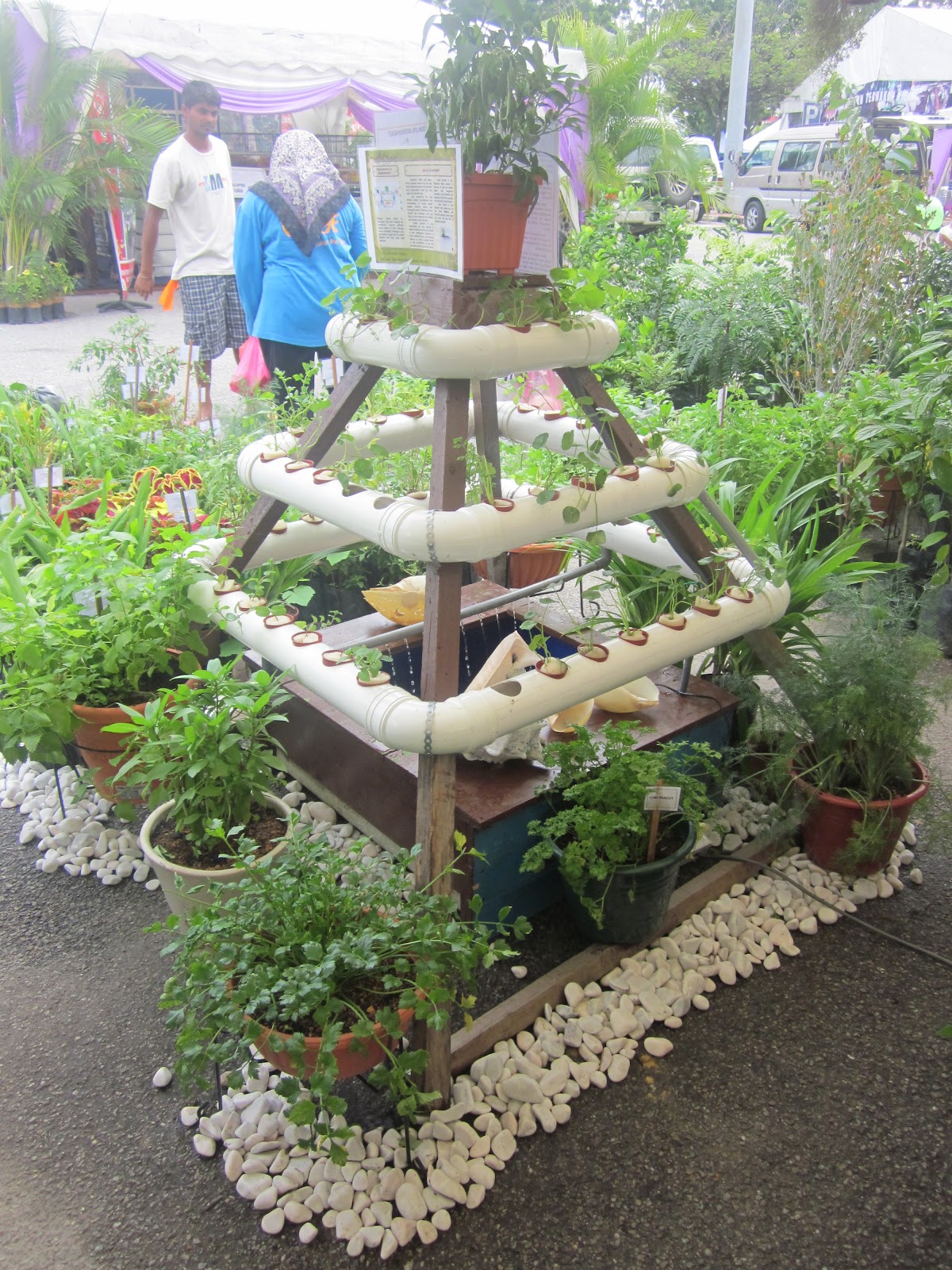
  • PHOTOS ARE ARISING FROM OUR OWN Research & Development OF THE PAST YEARS. IN FUTURE , MORE IMAGES TO BE UPLOADED FOR THE PURPOSE OF SHARING.


WHAT WE DO?
  • We design efficient and high yielding farm system for growing fresh food.

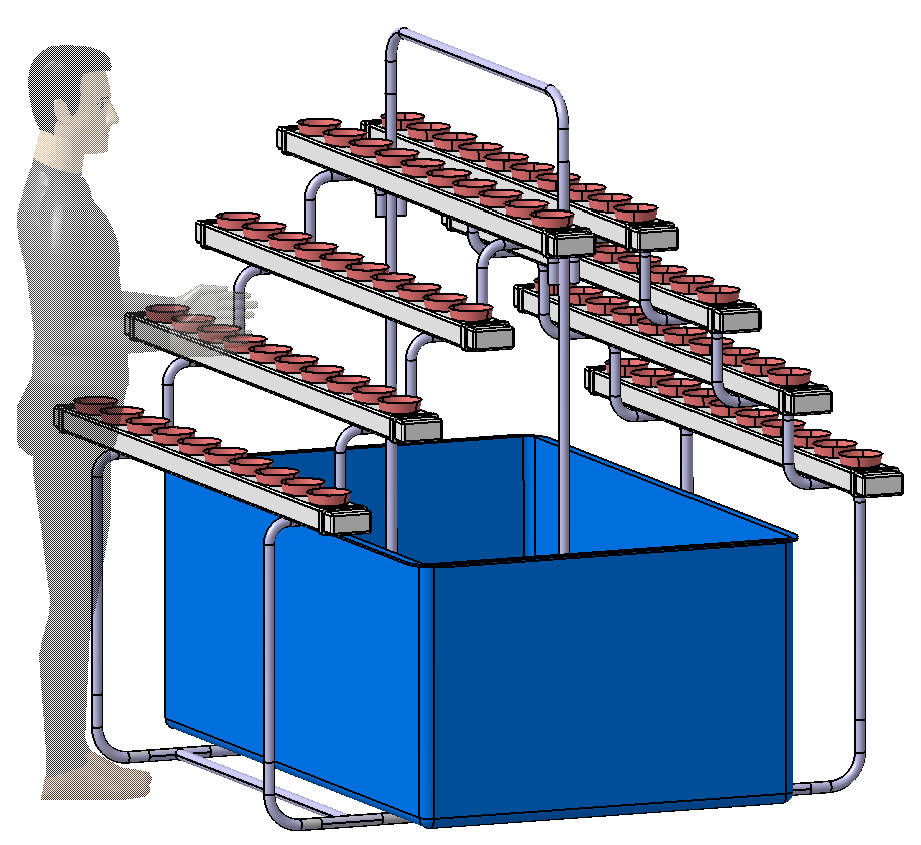
Design 1.


Design 2. 


Design 3.


Design 4.


Consulting.

  • Give ‘after sales service’ ongoing.

  • We conduct classes for individual and groups.


Sell And Supply.

  • We sell and supply material of equipment for those who utilize the system.


Introduction.
  • There are 3 main types of Aquaponics Systems, Media Based, Deepflow and NFT.
  • Media based which is the most common design used in backyard systems uses either gravel or clay pebbles. The plants are sown directly into the media. Gravel is used in the flood and drain system where the grow beds are flooded and drained periodically allowing water to circulate through the system on a regular basis. Expanded clay pebbles are used in the continuous flow system. The clay pebbles are designed to absorb water and keep the plant roots moist.
  • Deepflow/raft is mainly used for commercial systems. The media used is water and rafts made from styrofoam or a floating board with holes for pots to allow the plants to sit in where the roots are always immersed in the water.
  • Nutrient Film Technique  or known as NFT can be used for backyard or commercial but is the least commonly used. This is where the plants are in pots and a small amount of water is trickled through the base of the channel where the roots access the water.

The Concept Of Aquaponic.
  • Fish produce waste,which is broken down by bacteria into nitrates and then by another bacteria into nitrates. Water is circulated from the fish tank to hydroponic growbeds: the plants eat the nitrates which turn filters the water for the fish. There are also exchanges of Carbon Dioxide and oxygen, as well as Micronutrients; this system emulates what takes place in nature. Aquaponics is inherently organic and can be run entirely chemical free .
  • Aquaponics is simple but it must be balanced in order to work. It can take several weeks or months to get a system working properly and there a lot of potential downfalls if built incorrectly. The system must be “Cycled” just like a fish tank , the bacteria must flourish . Also the fish need to be balanced with the plants in order to establish the results.


Aquaponic Has Potential For Following Reasons.
  1. Little maintenance semimonthly with fishfeeders
  2. PH mysteriously balances itself
  3. Nutrients are self regulated by ecosystems
  4. 100% organic
  5. Can raise fish for hobby or food
  6. 1/10 water traditional farming and water is not dumped like with regular hydroponics
  7. Sustainable technology,eco-friendly
  8. Plants do not endure nutrient burn
  9. fish produce valuable fertilizers for many years, saving money
  10. fish can be fed scraps,bread, duckweeds,inexpensive food
  11. if the system is built correctly it will run for years nonstop
  12. The system works better and better as it ages
  13. Crop production is 300% faster due to the use of water and fish waste as plant growth media over the use of land
  14. Activities “ 2 In 1” simultaneously, breeding fish while growing crops

  • Once a system is set up and running its like a Nuclear reactor, it just keeps on running for years so long as  maintain the water levels and keep the fish fed.


VISION.
  • Our vision is to bring an innovative technology system to homes, agricultural sites for commercialization and low-cost to be owned by all levels of household savings. This approach is good for environment, healthy, time saving and save money for Malaysian society.

MISSION.
  • Our mission is to create awareness about healthy eating and easy to do by using the aquaponic system which is easily done by anyone  with simple but efficient way to save on daily expenses for a family .
  • Our goal is also to bring aquaponic system into commercial farms and fish rearing for farmers on a large scale with modest capital, once only but is able to produce good and continuous income .

OBJECTIVE.
  • Our intention is to introduce the aquaponic system to cultivating crops and rearing fish innately,healthy technology and cost effective to all Malaysian society

share with your friend